Skip to content


An ESD wrist strap is only effective when paired with a grounding cord connected to a verified earth point. Together, they form a continuous conductive path from the operator’s skin to earth ground, dissipating any built-up static charge safely and continuously throughout the working task.
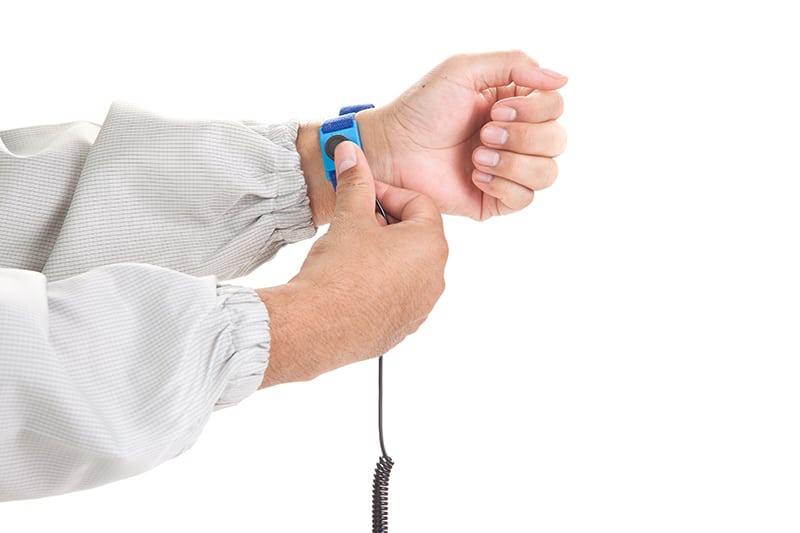
The wrist strap sits directly on the skin (not over a sleeve), and the cord connects to the wrist strap via the snap connection while the other end of the cord connects to a dedicated grounding point. Without the cord, the strap provides no protective function.
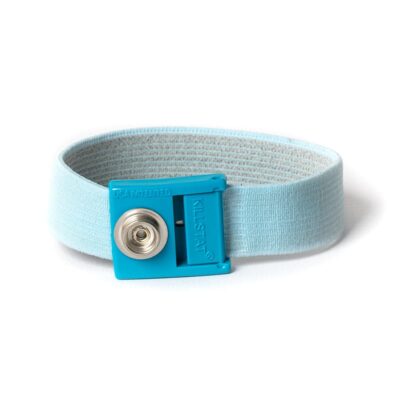
The ESD wrist strap maintains direct skin contact and conducts charge away from the operator. It includes a built-in 1 MΩ current-limiting resistor to prevent electric shock while maintaining a continuous earth path.
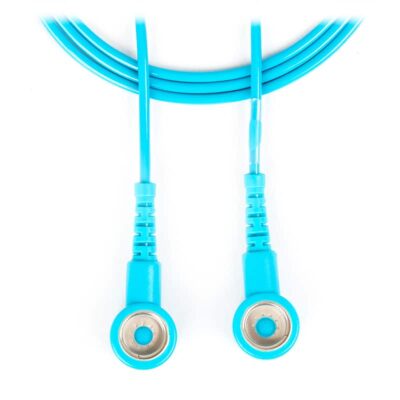
The grounding cord connects the strap to the verified earth point. The cord is available in coiled or straight formats and comes in various configurations such as 10mm snaps, banana jacks, or eyelets.
The wrist strap tester verifies that the complete circuit strap, cord, and skin contact is intact and within resistance limits set by IEC 61340-5-1. Testing must be performed before each use.
ESD wrist straps are commonly used alongside ESD workbenches, ESD matting, ESD flooring and footwear, and ESD packaging such as bags.
Not all wrist straps and cords are equivalent. Selecting the right specification depends on the task, the environment, and the level of compliance required. Use this guide to identify the correct product type, then click through to the relevant sub-category for full product listings.
Fabric (elastic) ESD wrist straps are the most common choice for general electronics assembly and daily use, lightweight, adjustable, and comfortable for extended wear. Metal wrist straps (typically stainless steel) suit high-duty or wash-down environments where fabric straps would deteriorate. Disposable wrist straps are ideal for visitors, contractors, or any situation requiring single-use EPA access without a permanent strap being issued.
For environments requiring continuous assurance, dual-wire (monitored) wrist straps connect to a wrist strap monitoring unit, which detects any open-circuit fault in real time and alerts the operator immediately, eliminating the risk of working ungrounded between manual tests.
Coiled grounding cords extend and retract as the operator moves, preventing trip hazards and keeping the workstation tidy, the preferred choice for operators who move across a bench or between stations. Straight grounding cords are suited to fixed-position work where the operator remains stationary and a shorter, direct run to the earth point is sufficient.
All ESD cords from Bondline are tested to IEC 61340-5-1 and available in standard snap, banana jack or eyelet configurations to suit your existing grounding sockets and ESD mat connectors.
All wrist straps and grounding cords supplied by Bondline meet the requirements of IEC 61340-5-1 – the internationally recognised standard for the protection of electronic devices from electrostatic phenomena. Key compliance requirements include:
IEC 61340-5-1 requires that wrist straps be tested before every use, typically at the start of each shift. If your wrist strap tester shows a fail, the strap or cord must be replaced before the operator enters the EPA.
Bondline stocks a full range of wrist strap testers.
Over 40 years supplying ESD control products to UK electronics manufacturers, defence contractors, and aerospace companies.
All wrist straps and cords meet the electrical performance requirements of IEC 61340-5-1 and are RoHS and REACH compliant.
In-stock items dispatched from our UK warehouse. Orders placed before the cut-off qualify for next day delivery*.
Unsure which strap or cord suits your application? Our ESD specialists advise on product selection, compliance requirements, and testing protocols.
An ESD wrist strap (also called an anti-static wrist strap, anti-static wristband, or electrostatic discharge strap) is worn by operators working with or near electrostatic discharge-sensitive (ESDS) components. It continuously grounds the operator to earth, preventing static charge from accumulating on the body and discharging into static-sensitive electronics. ESD wrist straps are mandatory personal grounding equipment under IEC 61340-5-1 within an Electrostatic Protected Area (EPA).
Yes. A wrist strap must be connected to a verified earth point via a grounding cord to provide any protection. A strap worn without a cord attached to earth will not dissipate static charge and provides no ESD protection. The cord connects via a snap on the ESD wrist strap, while the other end of the cord connects to a dedicated grounding point.
No – a standard corded wrist strap without an earth connection is non-functional for ESD purposes.
A single-wire wrist strap has one conductor in the cord and relies on periodic manual testing for verification. A dual-wire (or monitored) wrist strap has two conductors, allowing a continuous monitoring unit to detect any open-circuit fault in real time and alert the operator immediately. Dual-wire systems are required for critical assembly environments where even brief ungrounded periods are unacceptable.
IEC 61340-5-1 requires that wrist straps be tested before each use, typically at the start of every shift. Testing is done using an approved wrist strap tester, and results should be logged. Any strap or cord that fails a test must be replaced immediately and must not be used in the EPA.
The total resistance of the wrist strap system (strap + cord + operator contact resistance) must fall within the range of 750 kΩ to 35 MΩ when measured with an approved wrist strap tester. This range includes the mandatory 1 MΩ current-limiting resistor built into the cord, which prevents electric shock while still providing effective ESD grounding.
Coiled ESD cords extend and retract, making them ideal for operators who move around their workstation. They prevent tripping hazards and keep the workspace tidy. Straight cords are better suited to fixed-position work where the operator remains stationary. Both provide equivalent grounding performance when correctly specified and tested.
Yes. All wrist straps and ESD grounding cords supplied by Bondline are RoHS and REACH compliant, meeting UK and EU restrictions on hazardous substances. They also meet the IEC 61340-5-1 electrical performance standard for ESD protective equipment.
IEC 61340-5-1 requires the complete wrist strap-to-ground resistance (measured at the tester) to be between 750 kΩ and 35 MΩ. The lower limit prevents electric shock risk; the upper limit ensures static charge dissipates within a safe timeframe. Products outside this range, whether too resistive or too conductive, fail compliance and must be replaced.
Bondline also offers custom grounding cords, ideal for organisations with specific technical or branding requirements.
Customisation options include:
Contact our team to discuss bespoke grounding solutions tailored to your facility.
For guidance on selecting the right anti static wrist strap or ESD cord, contact our team on +44 (0)1793 511000 or email [email protected]