 Skip to content


Environmental conditions play a major role in how static electricity behaves and understanding these changes is essential for any workplace handling ESD‑sensitive electronic components. While static issues are often associated with cold, dry winter air, warm and humid weather can also influence charge generation, especially when air‑conditioning is introduced. At Bondline, we support EPA environments all year round with a full range of grounding and ESD‑safe products available through our online shop.
This article explores how hot and humid conditions affect static electricity, why indoor environments behave differently from outdoor weather, and what EPA managers should keep in mind throughout seasonal changes.
Humidity is one of the biggest environmental factors affecting static electricity.
Moisture in the air helps dissipate charge, which is why static shocks are more common in winter when the air is cold and dry. Indoors, heating systems reduce humidity even further, making static problems more noticeable.
In contrast, warm, humid weather naturally reduces static build‑up, but only outside.

Even when the weather is hot and humid, indoor environments can behave very differently. Air‑conditioning systems cool the air and remove moisture, creating dry, low‑humidity conditions that increase static generation.
This means:
This is why static shocks may disappear outdoors in humid weather but still occur inside air‑conditioned facilities.
Even with higher humidity, static can still be generated through:
Humidity helps reduce static, but it does not eliminate the need for grounding and EPA controls.
In environments where ESD control is critical – such as electronics manufacturing – the IEC 61340-5-1 Standard requires that temperature and humidity readings are taken when measuring static.
This is because environmental conditions directly influence charge behaviour, measurements can vary depending on humidity, and EPA performance must be validated under real conditions.
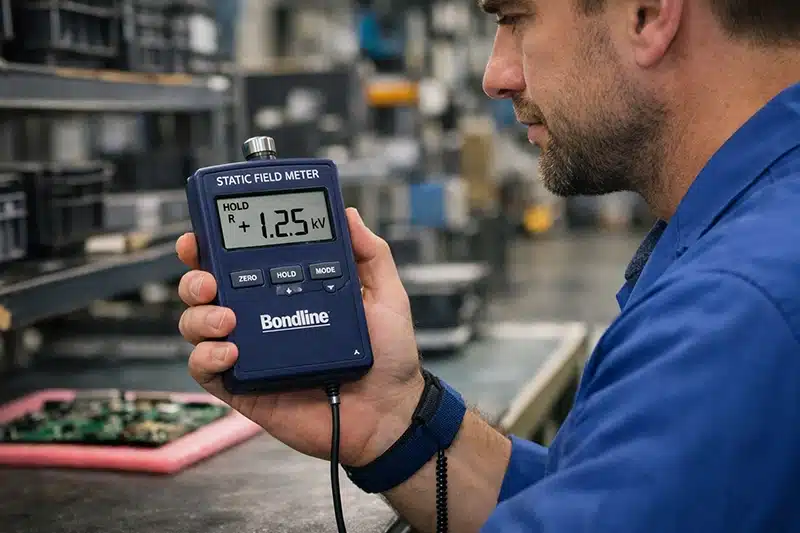
Static field meters are used to measure static fields, potentials and discharge time.
Whether the weather is hot, humid, cold, or dry, the following practices remain essential:
Environmental changes, even small ones, can significantly affect charge generation.
Environmental conditions change, but your ESD controls shouldn’t. Whether your facility is dealing with warm, humid air or the drying effects of air‑conditioning, maintaining consistent grounding is essential for protecting static sensitive components.
To maintain effective ESD protection in varying humidity, Bondline offers a complete range of grounding and EPA products, from anti static wrist straps and footwear to ESD bench and floor mats – designed to keep your environment compliant and your components safe.

Hot and humid weather can reduce static outdoors, but indoor environments often tell a different story. Air‑conditioning, airflow, and temperature control can create dry conditions that increase static risk, even during warm months.
Understanding how humidity and environmental controls interact is key to maintaining a safe and compliant EPA all year round. If you would like help with controlling static in your workplace, please get in touch with us by filling the form below. You can also get in touch with us by calling 01793 511000 or emailing us at [email protected].