
 Skip to content
Electrostatic discharge (ESD) is a silent yet pervasive threat in electronics manufacturing, high-tech assembly, and static sensitive electronic component handling. Even a small static shock can damage microchips, circuit boards, and other electronic components, leading to costly rework, downtime, and compromised product quality. As industries evolve and electronics become increasingly sophisticated, the demand for more effective ESD control solutions continues to grow.
In 2026, ESD protection is no longer just about traditional measures such as wrist straps, mats, or specialised flooring. Emerging technologies promise smarter, more integrated, and predictive solutions that will reshape how facilities manage electrostatic risk. For those seeking practical strategies for everyday static prevention, there are detailed guides available covering essential steps to minimise electrostatic risks effectively.
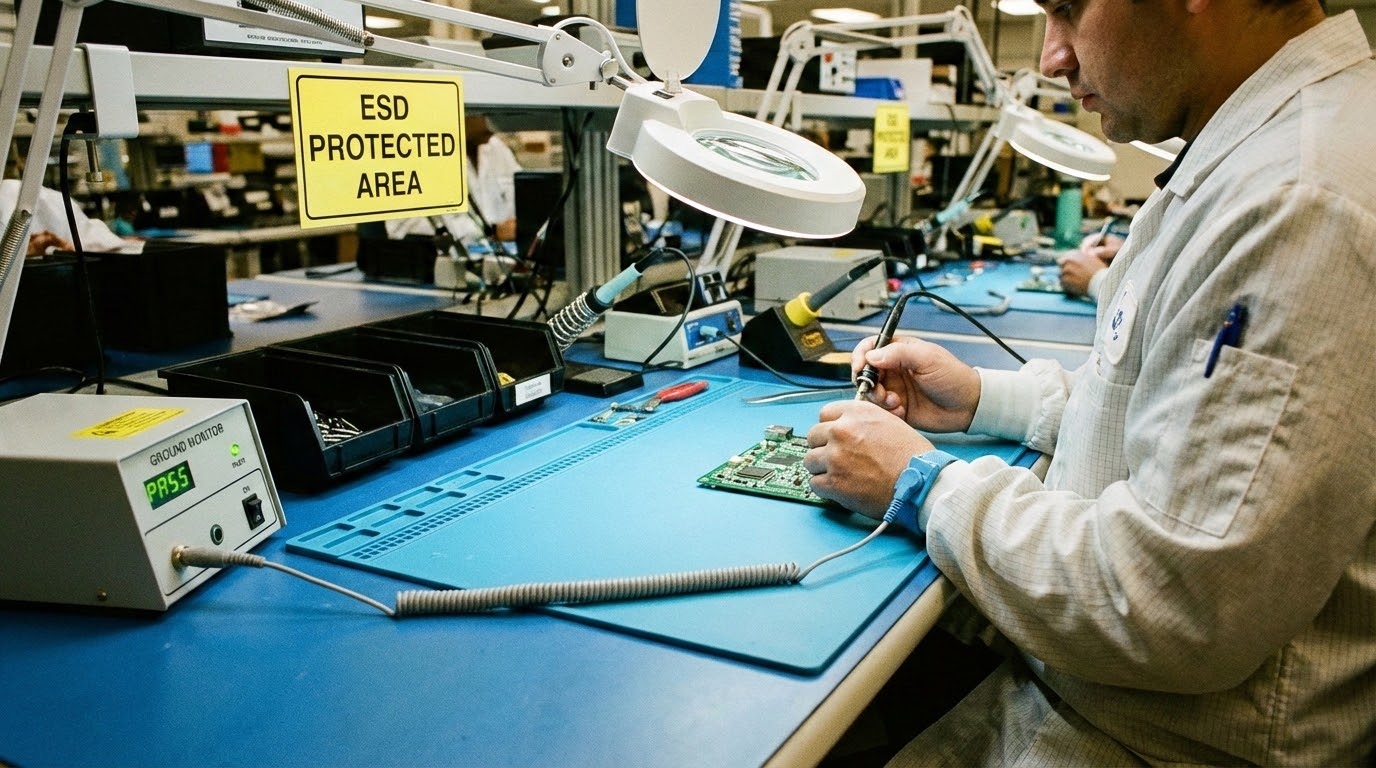
Today, effective ESD control relies on a combination of tools, practices, and training. Facilities use grounded workstations equipped with anti static mats to dissipate static charges, while anti static flooring ensures personnel remain safely grounded as they move around static sensitive areas. Anti static wrist straps, grounding cords, and ionisation systems are also common staples of ESD-safe environments.
For businesses aiming to maintain a static-safe workspace, Bondline Electronics Ltd offers practical ESD solutions that help meet industry standards and protect static sensitive electronic components.
Despite these measures, traditional ESD solutions have limitations. Static monitoring is often manual, corrective action is reactive, and materials can degrade over time. The next wave of ESD technology aims to overcome these challenges with smarter, more adaptive systems.
The landscape of ESD protection is set to transform in 2026, driven by advances in materials science, sensor technology, and data analytics. Here are the key innovations shaping the future:
Integration of IoT (Internet of Things) sensors into ESD control systems is one of the most significant trends. Smart sensors continuously monitor static levels across a facility, providing real-time alerts when thresholds are exceeded. These systems allow for predictive maintenance, ensuring that grounding systems and surfaces remain effective before issues escalate.
For example, a connected anti static mat equipped with embedded sensors can detect wear or contamination, alerting facility managers to replace or clean it before it compromises safety. Similarly, sensor-enhanced flooring can track personnel movement, identify high-risk areas, and generate actionable reports.
Wireless grounding technologies are emerging as a convenient alternative to traditional wrist straps and floor connections. Wearable sensors track an operator’s electrostatic charge in real time and provide haptic or visual alerts if limits are exceeded. These devices integrate seamlessly with facility-wide monitoring dashboards, making compliance easier without interrupting workflow.
This technology is particularly useful in high-mobility environments where employees frequently move between workstations, reducing reliance on fixed grounding points.
Material science is playing a critical role in evolving ESD control. New conductive polymers and surface coatings are creating mats and flooring that are more durable, cost-effective, and environmentally friendly.
These next-generation surfaces resist wear and provide consistent static dissipation over a longer lifespan, reducing replacement costs and downtime. Some materials also offer self-cleaning properties or antimicrobial coatings, beneficial for cleanroom and high-value electronics environments.
Artificial intelligence (AI) is becoming a game-changer in ESD risk management. By analysing historical ESD events, environmental conditions, and operator behaviour, AI algorithms can predict where and when static discharges are likely to occur.
For example, AI can identify patterns in electrostatic accumulation caused by humidity changes or specific equipment usage. Facility managers can then preemptively adjust environmental controls, deploy targeted grounding measures, or schedule maintenance for mats and flooring before incidents happen. This predictive approach reduces component losses and enhances overall operational efficiency.
Emerging technologies have profound implications, particularly in electronics manufacturing, cleanrooms, and assembly lines handling high-value components.
Adopting these technologies early provides a competitive advantage through improved quality, efficiency, and regulatory compliance.
For UK companies, implementing emerging ESD technologies represents both opportunity and responsibility. Businesses must balance the cost of new systems with benefits such as reduced component losses, improved efficiency, and compliance with international standards.
Providers such as Bondline can help integrate these solutions seamlessly. From upgraded mats and flooring to facility-wide monitoring systems, they provide both products and expertise to ensure successful implementation. Staff training remains critical, complementing technology to maintain a holistic approach to ESD management.
Looking beyond 2026, several trends are likely to influence ESD protection:
These trends highlight the need for businesses to remain agile, investing in technologies that meet today’s requirements and anticipate future challenges.
The future of ESD protection is smarter, more integrated, and increasingly predictive. Emerging technologies such as AI-enabled monitoring, wireless grounding, and advanced materials for mats and flooring promise to transform how UK businesses protect static sensitive electronics.
By staying informed about these innovations and leveraging expert solutions, companies can reduce risk, improve efficiency, and maintain compliance with evolving ESD standards. For practical, day-to-day strategies, the step-by-step guidance in How to Prevent ESD Damage remains an essential resource.
Forward-thinking businesses that embrace these emerging technologies will be best positioned to thrive in an increasingly high-tech, sensitive environment.
Electrostatic discharge (ESD) protection prevents damage to static sensitive electronic components caused by static electricity. It involves using anti static mats, flooring, grounding tools, and staff training to safely dissipate charges and protect high-value electronics in manufacturing and assembly environments.
An anti static mat channels static electricity away from work surfaces, preventing charges from harming electronic components. Combined with proper grounding, it creates a safe workspace for assembling, testing, and repairing static sensitive electronics.
Key innovations include AI-enabled monitoring, IoT-connected mats and flooring, wireless grounding devices, and advanced conductive materials. These technologies allow real-time monitoring, predictive management, and improved durability of ESD protection systems.
Businesses can implement ESD solutions by using mats, flooring, and smart monitoring systems while training staff in best practices. Tailored approaches help maintain safe, compliant, and efficient ESD environments.
Practical steps include grounding personnel with anti static wrist straps, keeping work surfaces clean, controlling humidity, and monitoring static levels regularly. Consistent application of these measures reduces the risk of electrostatic incidents.
Some of these cookies are essential, while others help us to improve your experience by providing insights into how the site is being used.
For more information and to read more about our privacy policy, please visit our Privacy Policy
Necessary cookies enable core functionality. The website cannot function properly without these cookies, and can only be disabled by changing your browser preferences.